
RECONSTRUCTION
CUDA · PyTorch · gsplat (our own GPU processing server)
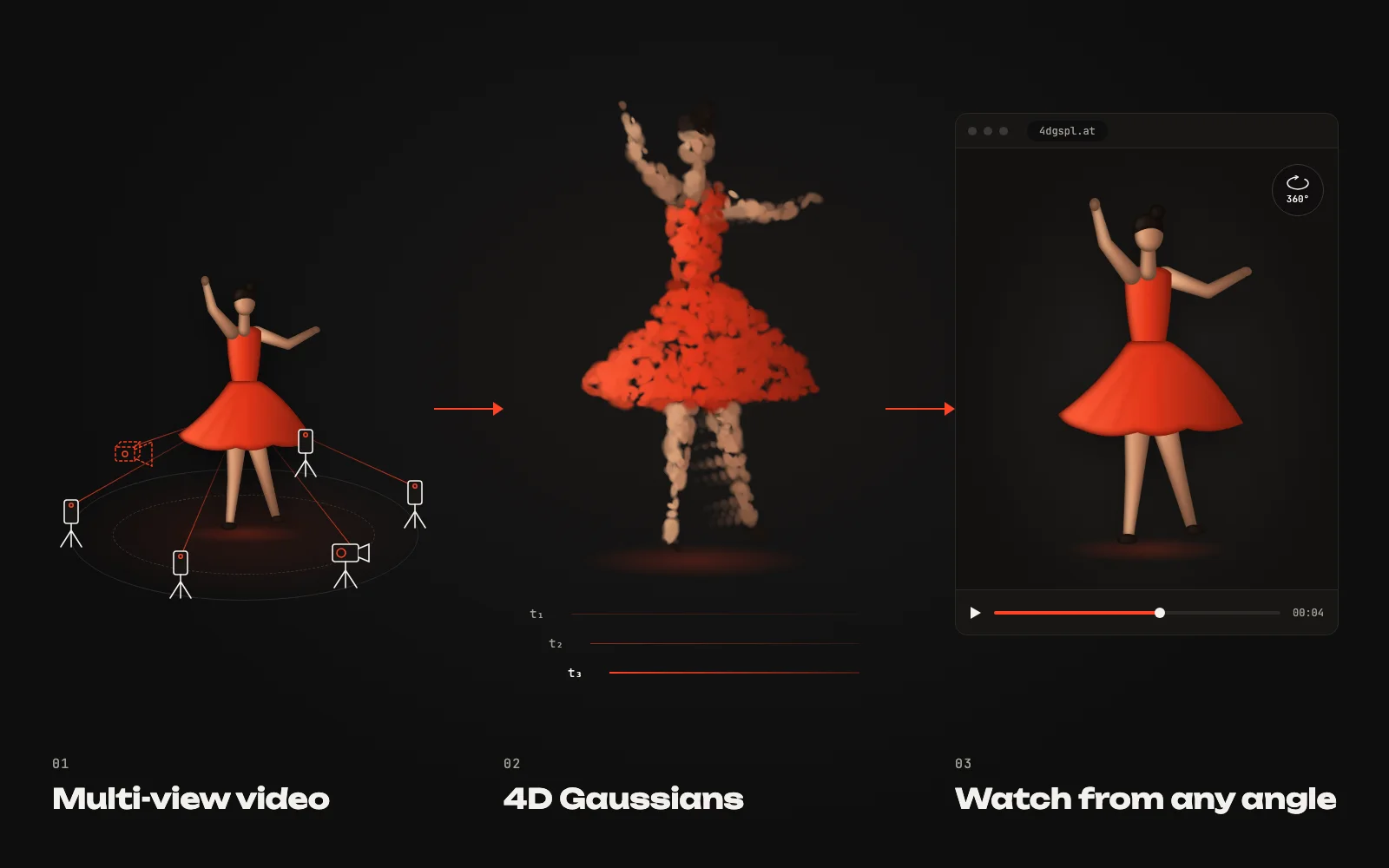
Synchronized videos of the same moment from 4–8 (or more) viewpoints are uploaded in the dashboard and submitted for processing. The system calibrates the frames, reconstructs the scene for every moment with Gaussian Splatting and turns it into a 4D scene that plays in the browser.
Results can be opened with a share link, embedded in another page or downloaded as a ZIP. New: a 3D model (3DGS) can also be created from a single photo.
Videos can come from real cameras, phones on tripods, virtual cameras in Blender, Unreal or Unity, or from AI coding agents. What you deliver is the same in every case: one video per camera and, ideally, camera calibration.
The capture guide explains camera placement, common rules and a checklist step by step.
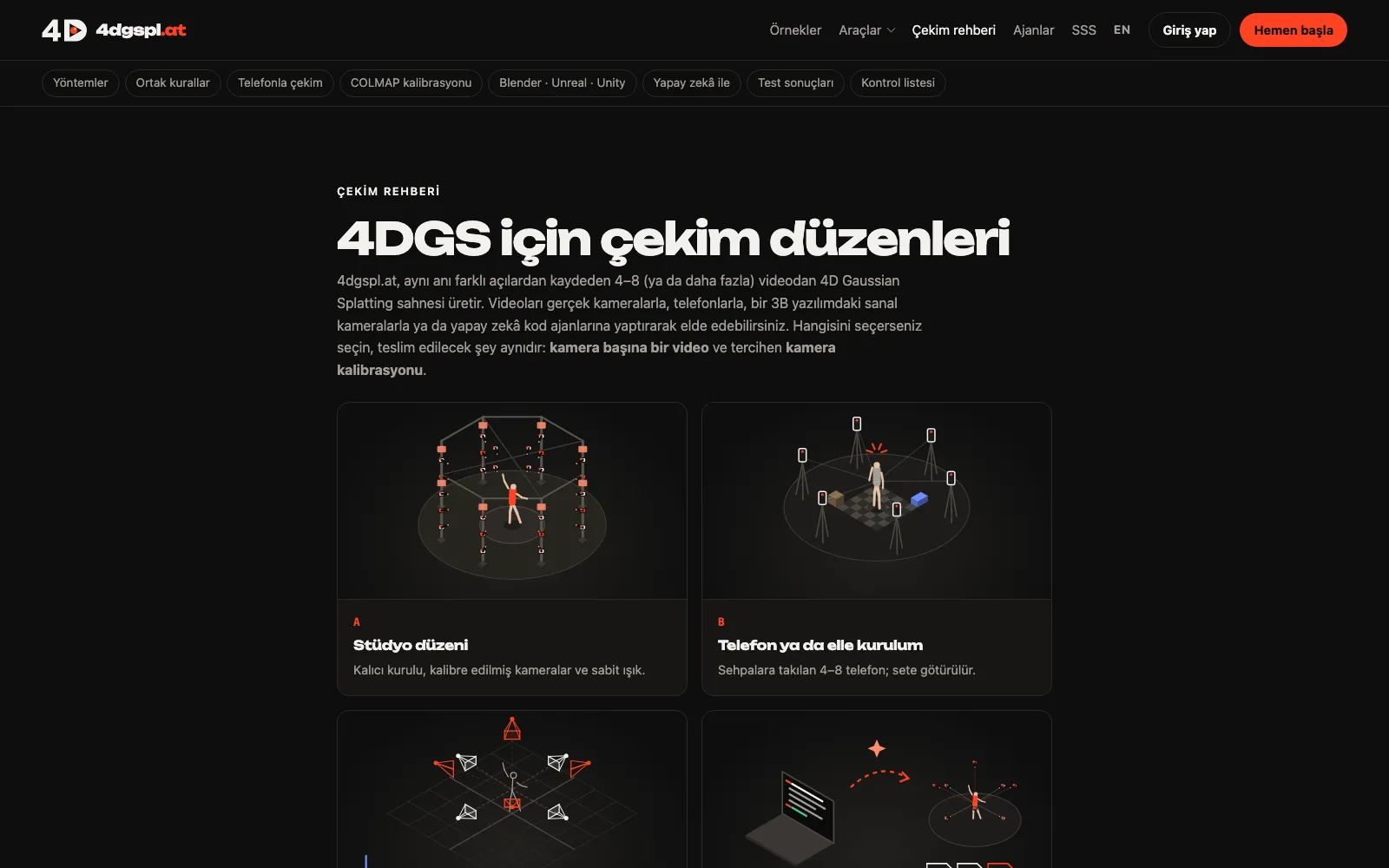
4dgspl.at has an API and an MCP server that AI coding agents such as Claude Code or Codex can use. An agent can set up a virtual camera rig, render the videos, upload them and submit the job.

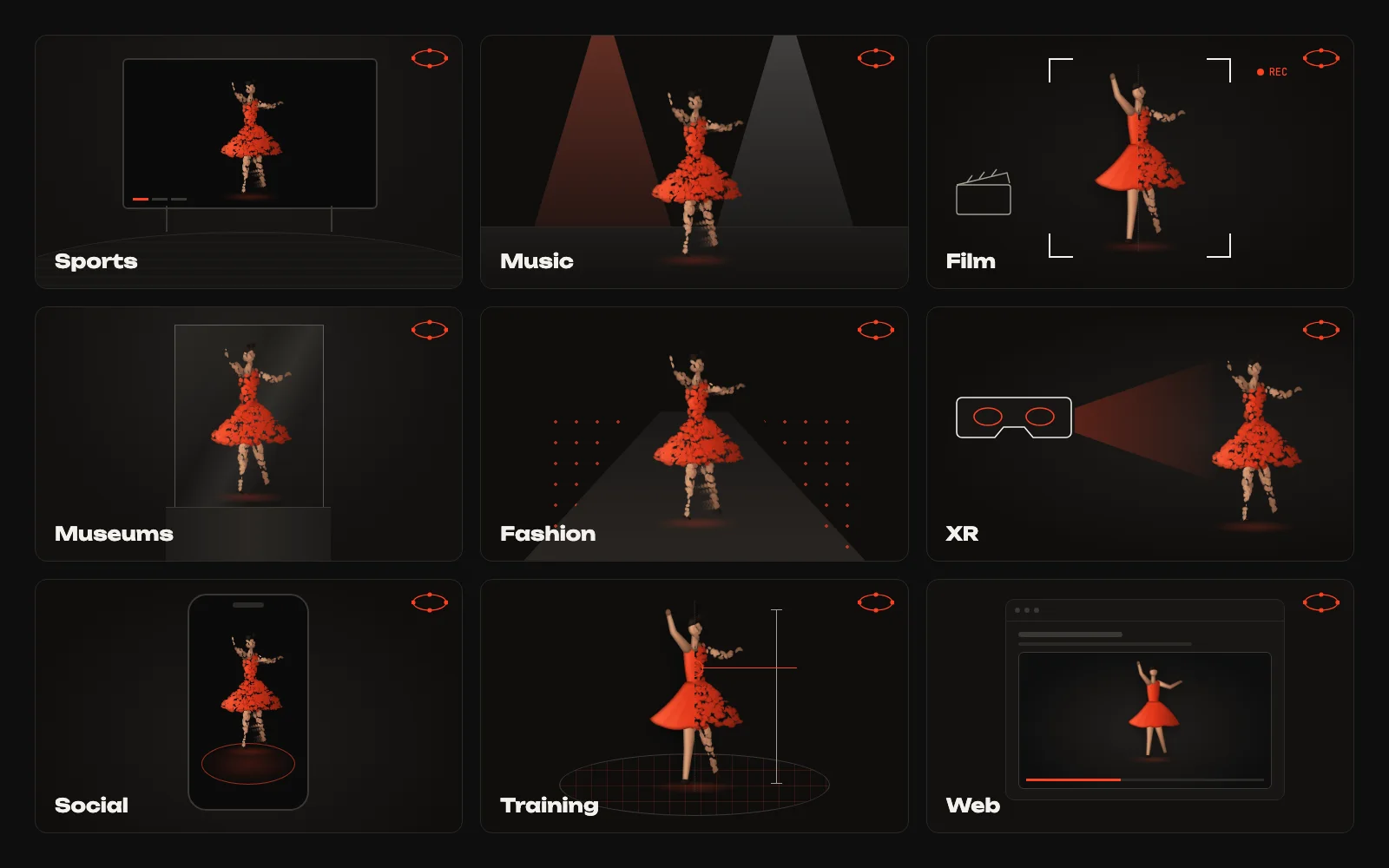
The resulting 4D scene can be used for sports replays, concert and stage recordings, film previsualisation, museum exhibits, fashion shows, XR headsets, mobile augmented reality, training and players embedded in websites.
4D Gaussian Splatting represents a scene with many small, semi-transparent, coloured ellipsoids (splats). The ellipsoids move over time; blended together in the browser, they form a realistic image.
While the scene plays in the browser, viewers can drag to rotate the camera and zoom in. The same player opens from a share link or embedded in another page.